Chickpea Curry (Low-Fat, Low-Sodium Optimized)
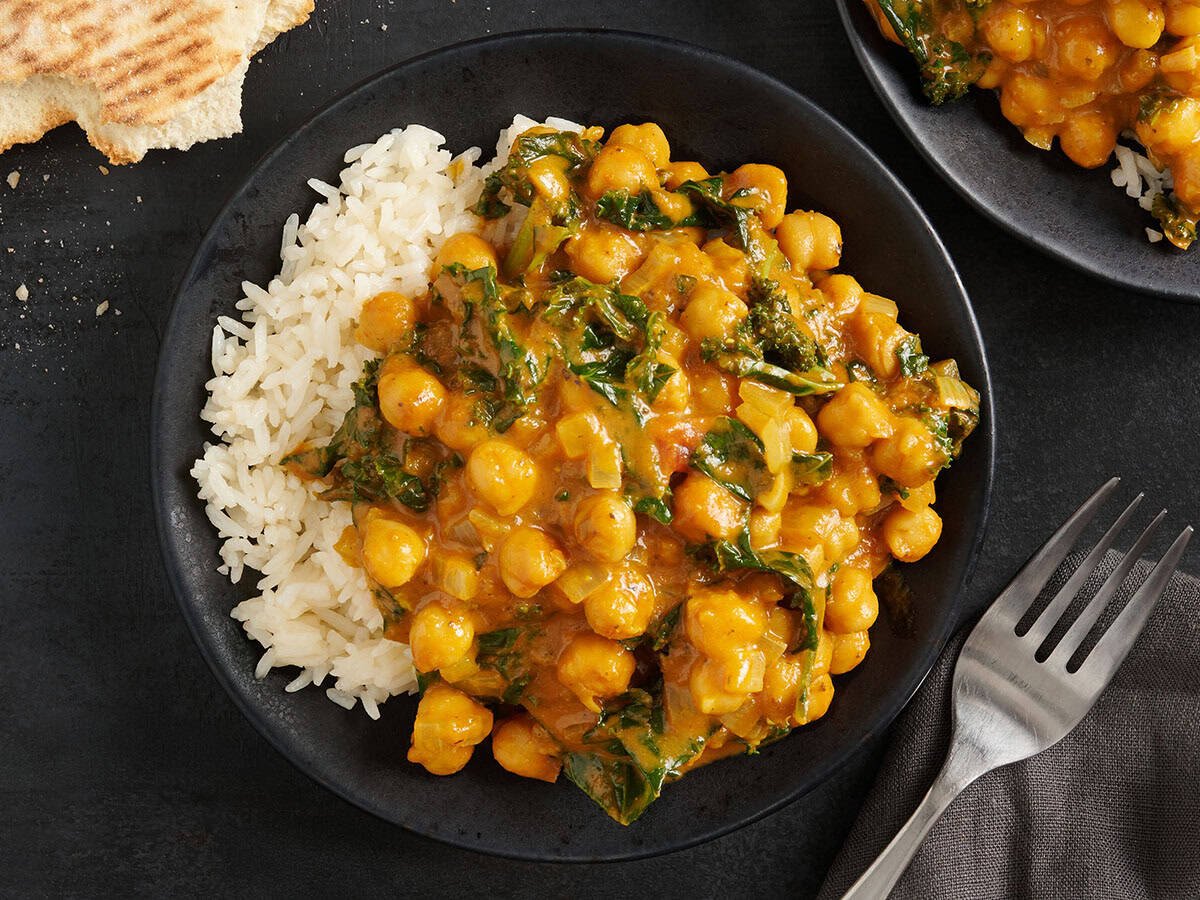
Why this version is better
Fat drops from ~33.9g to ~7.8g per serving — moving well under the 10g target. Calories fall from ~587 to ~310, comfortably under 500. Sodium is significantly reduced by choosing no-salt-added tomato sauce and omitting added oil. Carbs remain moderate. Protein is minimally affected. The user's custom swaps (butter→Greek yogurt, heavy cream→skim milk) were not applicable to this recipe's original ingredient list and were correctly ignored.
Cooking note: The most critical swap is full-fat coconut milk → light coconut milk (50% less fat). This thins the sauce emulsion slightly, so a 10-minute extended simmer is added to reduce and re-thicken. Replacing olive oil with a water-sauté technique eliminates ~27 calories of fat entirely without affecting the Maillard browning of aromatics at medium-low heat. The tomato sauce swap to no-salt-added tomato sauce directly targets the low-sodium restriction without affecting texture or acidity. Light coconut milk still contains enough natural emulsifiers (lauric acid triglycerides) to produce a creamy, cohesive curry sauce.
Got a recipe you love? Paste the URL and Sage will healthify it.
Your first 3 are free — no credit card.
- 1½ Tbspcurry powder
- 1 tspcumin
- 1yellow onion (diced)
- 2garlic cloves (minced)
- 1 tspfresh ginger (grated)
- 13.5 ozlight coconut milk (canned)Swapfull-fat coconut milk (canned)light coconut milk (canned)
- 8 ozno-salt-added tomato sauce (canned)Swapregular tomato sauce (canned)no-salt-added tomato sauce (canned)
- 2 × 15 oz canschickpeas, drained (canned)
- 4 ozkale, chopped (~3 cups)
- 3 Tbspwater (for sautéing)Swapolive oilwater (for sautéing)
More healthy recipes
Original recipe from source
Got a recipe you love? Paste the URL and Sage will healthify it.
Your first 3 are free — no credit card.